
EVAP Purge Valve
The EVAP purge valve is an electronically controlled solenoid that regulates the flow of fuel vapors from the charcoal canister into the engine's intake manifold. When the ECU determines conditions are right — typically at operating temperature and steady cruise — it opens the purge valve so stored vapors can be drawn into the intake by engine vacuum and burned during normal combustion. A stuck-open purge valve floods the engine with vapors and causes rough idle, hard starts after refueling, and a rich fuel condition. A stuck-closed valve traps vapors in the canister, builds tank pressure, triggers the check engine light, and allows fuel odors near the vehicle. On many GM trucks, the purge valve is mounted directly on the intake manifold and is a common failure point after 80,000 miles. Ford and Toyota locate theirs inline between the canister and intake, often making them easier to access. David Jr. tests purge valves at Apex using a scan tool to command the valve open and closed while monitoring short-term fuel trims — a shift of 5% or more confirms flow. A valve that clicks but doesn't flow gets replaced. Smoke testing the EVAP system reveals any secondary leaks in hoses or the canister itself.
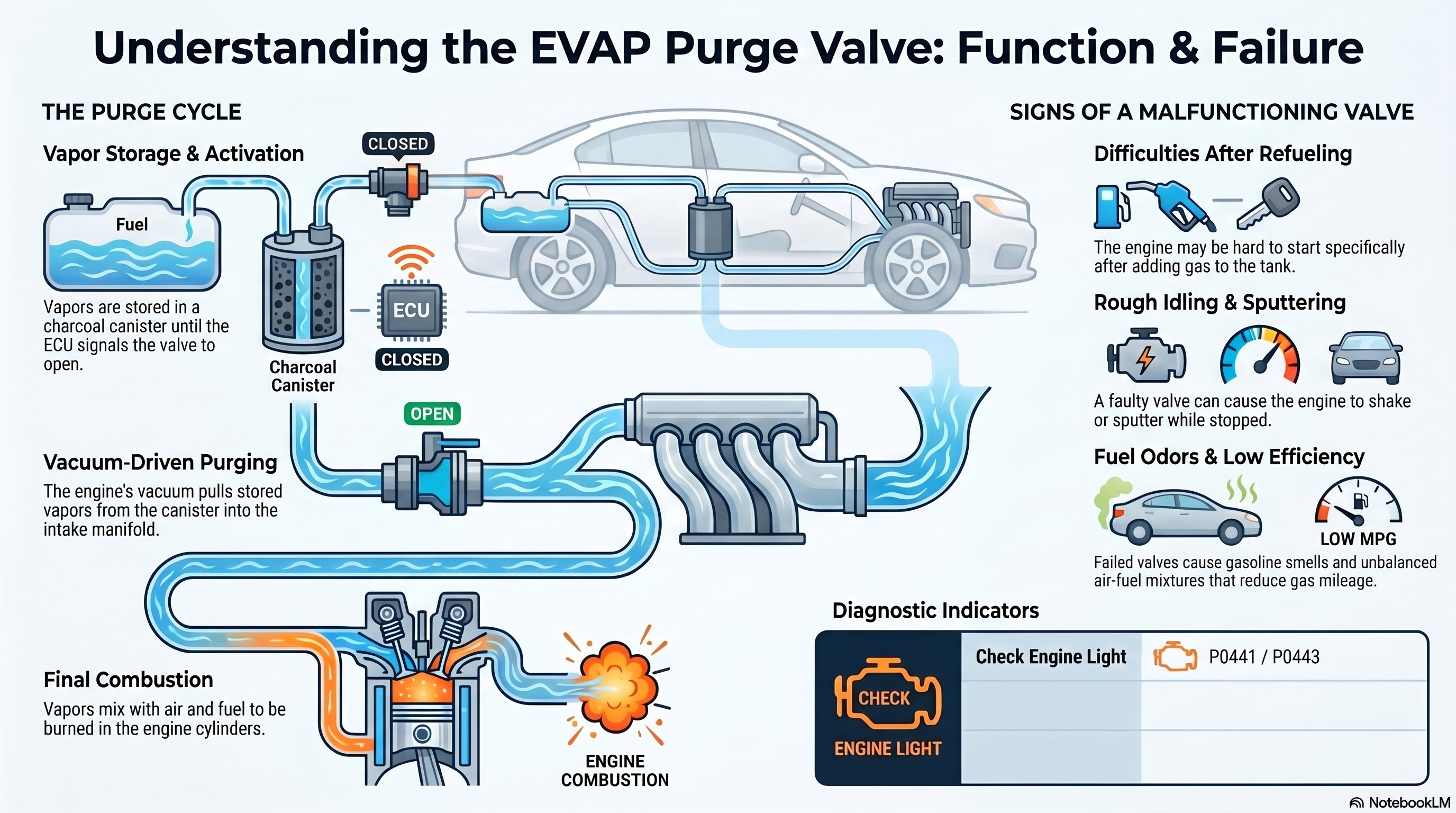
The EVAP purge cycle: fuel vapors are stored in the charcoal canister, released by the ECU-controlled purge valve, drawn into the intake by engine vacuum, and burned during combustion. Common failure symptoms include difficulty starting after refueling, rough idle, and gasoline odors.